Toolkits
Components we install into IBM BAW
Each of these is a component a process designer drops into a flow or a screen — not a
platform to migrate onto. They share one architecture: Claude produces data, deterministic
rules decide what happens next, and every output is validated before it is trusted.
We are honest about status below. One is demonstrable today; the other two are in active
development and we will show you where they are.
Toolkit 01
Live demo available
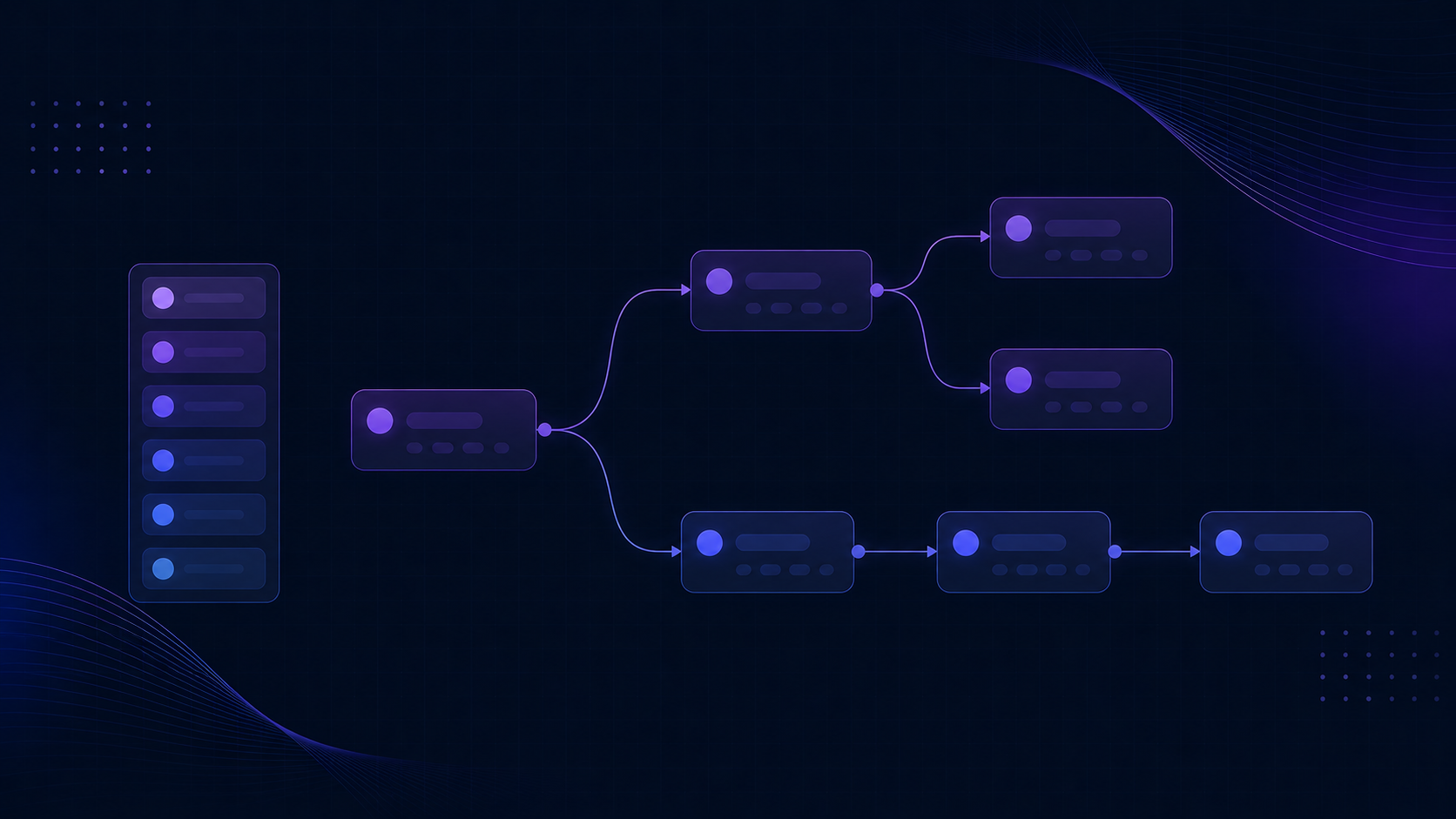
Self Service Dynamic Flows
A builder that lets a business-unit administrator draw a working process and publish it
without a deployment. Flows are a versioned JSON graph that an in-app router executes
against BAW through a small fixed set of generic set pieces.
- Drag-and-drop canvas with a task-type registry — new capability is a registry entry, never a special case in the router
- A publish gate that blocks a flow until the graph is well formed and every loop is guarded
- A step debugger that advances one node at a time with before/after run data
- An optional Claude assistant that authors flows through the same command surface the UI uses

Toolkit 02
In development
Claude Reporting Dashboard
Business users configure their own report pages — instance progression, ageing by
step, volumes by whatever dimension they need — without a developer and without
exposing data to the model.
- Claude receives a description of your data structures — never rows, not sampled, not anonymised
- Only pre-approved sanitised views are described, so restricted columns cannot be named
- Output is schema-validated JSON configuration plus read-only queries, parsed before execution
- Nothing is saved until a person reviews it, and the approval is recorded

Toolkit 03
In development
Claude Data Extraction Pipeline
Assistant tasks that classify incoming documents with vision and pull structured fields
out of them, as ordinary steps inside a BAW process rather than a separate system.
- Classification against a closed taxonomy, where unknown is a valid answer rather than a guess
- Schema-defined extraction carrying the verbatim source span and a confidence band per field
- Business-rule validation in ordinary code — totals reconcile, references resolve
- Low confidence routes to a human review coach view; corrections become your evaluation set
What they have in common
All three are built to the same four rules, which is what makes them safe to put inside a
regulated process:
The model never routes. It produces data; rules decide.
Tool surface only. No raw query interface, no arbitrary execution.
Least context. Assembled per task from the fields that task needs.
Validated output. Business rules checked deterministically, every time.
The whitepapers
Want one of these against your own estate?
We adapt the task-type registry to your systems and connect the runtime to your Workflow
environment. Tell us which processes are eating your delivery capacity.
Start a conversation